

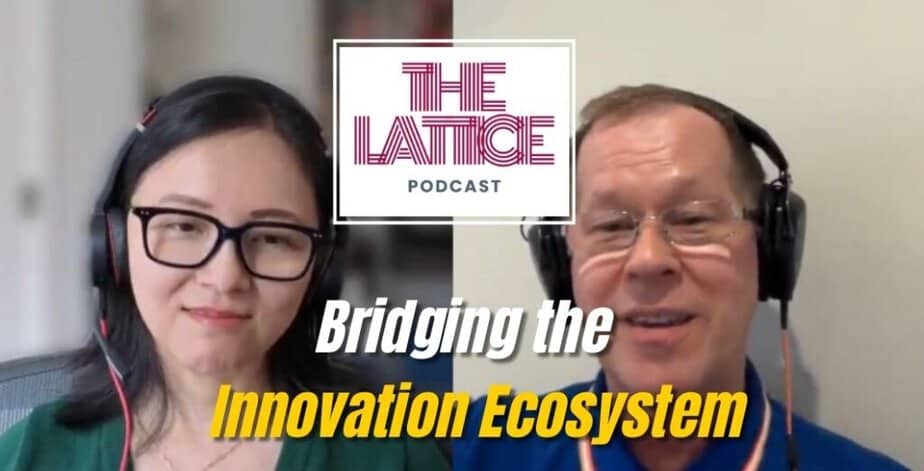
Innovation is a chess game. The right move can turn an idea in a university lab into a company, a breakthrough, or even a treatment for patients. On this episode of The Lattice, we sit down with Mark Alan Wisniewski, Senior Director of Biopharmaceuticals at the UCLA Technology Development Group (TDG), to explore how universities navigate the complex game of turning research into real-world impact. Mark Alan Wisniewski makes the argument that a university technology transfer office is an investment thesis, not a cost center. UCLA receives more than $1.5 billion in federal research grants to its medical school each year, generating 300 to 400 invention disclosures that TDG can patent and license. Wisniewski explains how the office converts early-stage faculty research into startups, why it writes “use it or lose it” development milestones into licenses so inventions are not shelved, and how the 1980 Bayh-Dole Act let universities own and commercialize federally funded intellectual property (IP). He cites concrete outcomes: two of the top five prostate cancer drugs, a licensed cure for ADA-SCID gene therapy from Dr. Donald Kohn’s lab, and UCLA’s $1.14 billion sale of its Xtandi royalty interest in 2016.
⚠️ Disclaimer:
This podcast is for educational and informational purposes only. The views expressed do not constitute engineering, medical, or financial advice. The technologies and procedures discussed may not be commercially available or suitable for every case. Always consult with a qualified professional.
Support our show and get premium and archived content anytime:
Subscribe to The Lattice Podcast
About Our Guest:

Mark Wisniewski is the Senior Director of Biopharmaceuticals. He is responsible for the life science and biopharma intellectual property developed at UCLA, including managing licensing and marketing staff, financial management of the portfolio and outreach to inventors and industry. His career spanned multiple roles in biotech management, entrepreneurship and product commercialization in both start-up to Fortune 100 companies. Prior to his role at UCLA TDG, Mark was the Head of Special Projects at Prolacta Bioscience, a producer of human milk nutritional products for premature infants in the neonatal intensive care unit, leading the strategic planning and business development functions. He was also a Principal Advisor to the National Institutes of Health and National Cancer Institute’s Commercialization Accelerator Programs which provides business strategy, product commercialization, fund raising and strategic partnership guidance to hundreds of early stage biotech and life science companies. Mark began his career at Baxter Healthcare where he held positions in business development, strategic planning, marketing and R&D. Mark received his MBA from the UCLA Anderson School of Management and his Masters of Immunology and Microbiology at the UCLA School of Medicine.
Key Topics
How a technology transfer office connects academic research to entrepreneurs and industry
The Bayh-Dole Act of 1980 and its impact on university innovation
UCLA’s invention pipeline, from 300 to 400 disclosures to patents, licenses, and startups
UCLA’s prostate cancer drugs and ADA-SCID gene therapy breakthrough
Mark Wisniewski’s journey from immunologist to biopharma dealmaker
Why faculty researchers often become startup founders
The role of technology transfer in patents, licensing, startup formation, and commercialization
Exclusive vs. non-exclusive licenses and how licensing terms are structured
The “use it or lose it” approach to preventing promising research from being shelved
Intentional competitive shelving and how universities respond
UCLA TDG’s proximity effect and the ingredients of a successful innovation ecosystem
Why technology transfer should be viewed as an investment thesis, not a cost center
UCLA’s $1.14 billion royalty sale and the economics of university innovation
Measuring innovation over the long term, from invention to startup to exit
Serial founders, untapped talent, and the potential for the next Amgen in Los Angeles
LABEST and the effort to build Los Angeles into a leading biotech ecosystem
From accelerator to catalyst and the future of university-driven innovation
Timestamps:
00:00:00 – Welcome And The Tech Transfer Mystery
00:00:56 – What A Tech Transfer Office Licenses
00:02:06 – Bayh-Dole And The Innovation Pivot
00:04:59 – Mark’s Chess Like Career Path
00:08:10 – Why Faculty Startups Lead Licensing
00:13:10 – Exclusive Versus Nonexclusive License Strategy
00:15:02 – Preventing IP Shelving With Diligence
00:21:40 – UCLA’s Scale Startups And Proximity Effect
00:27:00 – Tech Transfer As Long Term Investment
00:36:40 – LA BEST And Building Biotech In LA
00:39:50 – The Future Beyond “Tech Transfer”
Resources:
🔗 Contact Mark Alan Wisniewski
- Mark Alan Wisniewski, UCLA Technology Development Group
- Mark Alan Wisniewski on LinkedIn
- UCLA Technology Development Group
- UCLA Technology Development Group Staff
- LABEST
- Amir Naiberg, UCLA TDG
🔗 University Innovation, Technology Transfer & the LA Biotech Ecosystem
- UCLA Sells Royalty Rights Connected with Cancer Drug to Royalty Pharma
- LABEST 2026: Scientific Innovation and the Future
- LABEST, Los Angeles Bioscience Ecosystem Summit
- Los Angeles Bioscience Ecosystem Summit 2021
- The UCLA Research Park
- California Institute for Immunology and Immunotherapy
- Magnify Incubator at CNSI
- California NanoSystems Institute at UCLA
- UCLA Entrepreneurship Hub
- Gilead Sciences Acquires Kite Pharma for $11.9 Billion
- Amgen
- Prolacta Bioscience
- J.P. Morgan Healthcare Conference
🔗 Technology Transfer, Licensing, Commercialization
- From Bench to Bedside, ASH Clinical News
- UCLA Inks Two Research Deals Around Cancer, MS Therapeutics
- Xtandi
- The Future Is Now: Mark Wisniewski of UCLA TDG
- Authority Magazine Interview with Mark Wisniewski
- BCLA’s 10th Annual Bioscience Talent Connection
- Alliance for SoCal Innovation, Research Commercialization
- Baxter
🔗 Learn More About 3D Bioprinting from 3DHEALS!
- 3DHEALS
- 3DHEALS Ultimate Resource Center for Healthcare 3D Printing
- Bench to Bedside: Bioprinting Innovations
- 3D Bioprinting for Drug Discovery and Development
- In Silico Simulation for Medtech and Biopharma
- 3DHEALS Startup Showcase
- The Fabrication of Microfluidics, 3D Cell Culture & Organ-on-a-Chip
- An Introduction to 3D Bioprinting
Comments