

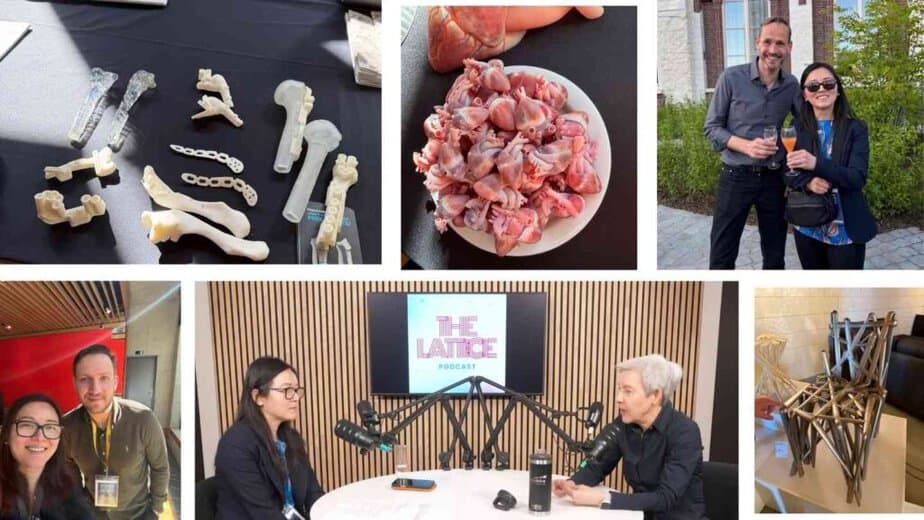

On a warm spring afternoon in Leuven, Belgium, I sat down next to a stranger at a medical conference and asked what he did for a living. Quinten Veerman’s answer stopped me: he is a Technical Physician, a 3D specialist at OCON Orthopedic Center in the Netherlands. I had never heard the title before. By the end of the day, I had met a dozen more engineers who see patients, or clinicians who understand the physics of the tools they prescribe. These are practitioners who exist, formally and legally, at an intersection that the rest of the world’s healthcare systems have never bothered to pave.
A Profession the World Is Yet To Copy
The Technical Physician is a Dutch invention, born of a straightforward observation: hospitals everywhere had acquired extraordinary technologies, but few on the clinical staff truly understood them. The degree, developed at the University of Twente in 2003, was the Netherlands’ answer to that gap. More than a thousand graduates have followed since.
More precisely, a Technical Physician occupies a unique niche at the intersection of advanced engineering and direct patient care, working within hospital departments such as the ICU, operating rooms, and radiology to independently perform complex diagnostic procedures, surgical interventions, and AI-driven, personalized treatments (such as 3D-printed devices). Students complete an intensive six-year Master of Science program in Technical Medicine, offered through collaborations between Dutch technical universities and academic medical centers. The program integrates rigorous engineering theory, medical data science, and hands-on clinical rotations, training graduates to safely bridge the gap between complex technological innovation and the human body.
The gap it addresses isn’t unique to the Netherlands. It exists in every hospital system that has adopted imaging, robotics, or digital planning tools. Elsewhere in the world, individuals like Rashi Gupta and Dr. Tristan Ramcharan (a pediatric cardiologist I met at the same conference) bridge this divide through personal initiative rather than structured training. There are many of them in the 3DHEALS community. But self-taught hybrids are the exceptions. The Netherlands made them the rule.
One reason the model hasn’t spread is perhaps structural: the Netherlands had to adapt its national laws, establishing Article 36a of the BIG Act to grant these hybrid clinician-technologists independent authority to treat patients. As medical technology advances and healthcare complexity grows, the gap the Technical Physician fills is widening, not closing. Which makes it harder to explain why no other country has followed.
The conference that brought them here was hosted by Materialise and the kind of gathering a company can convene says something about the depth of the ecosystem it has built.
Materialise: From 3D Printing to 3D Solutions
Founded in 1990 with a single 3D printer, Materialise was built on a medical ambition from the start. Co-founders Fried Vancraen and Hilde Ingelaere wanted to be a dominant force in healthcare, a goal that would take three decades to prove. CEO Brigitte de Vet-Veithen said it plainly in a recent podcast with me: “The second shift that we’ve gone through at Materialize for the last 10 years in the medical arena …(is that) we’re not a 3D printing company anymore. Our customers don’t see us as a 3D printing or 3D technology company anymore. They see us as a person bringing or a partner to bring HIP solutions, shoulder solutions, cranial maxillofacial solutions, and structural heart solutions, but they don’t care what we 3D print. The technology doesn’t really matter to them. They need the right solution for their patient. So we are a medical company.”
That clarification matters.
In 2025, the company’s medical division helped more than 70,000 patients and had cumulatively produced over 700,000 patient-specific models, guides, and implants. Its Mimics imaging software has analyzed more than six million patient scans across hospitals, academic institutions, and device companies in 21 countries. About half of Materialise’s revenue now comes from its medical division — a share that has nearly doubled over four years, as the company has steadily shed broader ambitions and concentrated on the one market where 35 years of regulatory and clinical infrastructure are genuinely difficult to replicate.
That focus was not always obvious. The HQ in Leuven has a startup vibe that surprises first-time visitors. A flat org chart, an informal culture, and founder Fried Vancraen walking the conference floor like any other attendee. But the history visible there includes commercial experiments that didn’t survive: furniture, artistic lamps, consumer products that tested the technology’s limits and found them. What outlasted that period of exploration was a sharper thesis: scalable personalized surgical care.
Today, instead of pushing 3D printing into every hospital and procedure, Materialise is integrating its point solutions: surgical planning software, manufacturing services, and novel device creation as a connected system rather than separate offerings. The company calls its strategy a “Slow Revolution”, transformative in potential, gradual in adoption. The evidence suggests it has been patient enough to wait.
What is memorable about the Materialise conference wasn’t just about the technology; it was the people in the room. Several generations of hybrid physician-engineer practitioners from many different healthcare systems, countries, and with different journeys and stories to share.
The Community: Off The Zoom
Before the pandemic, 3DHEALS had more than 30 volunteer community managers hosting events in over 20 cities worldwide. The people who showed up shared something: a conviction that 3D printing wasn’t just a manufacturing technology, but a different way of imagining future medicine. That future also requires bridging the gap between physicians (or healthcare system) and engineers (or technology).
Being back in a room with familiar faces and new ones in Leuven was a reminder of something six years of Zoom calls had made easy to forget. The idea that meaningful change tends to start with understanding and trust.
This brings me back to the concept of Technical Physician, an entirely new kind of healthcare workforce that has demonstrated its value and established trust in the Netherlands. This also raises the question of why no other country has taken a similar step.
The Blip Test
Technology has made surgical care faster and more personalized, but it has also widened the gap between what the tools can do and who knows how to use them. At conferences like this one, audiences are routinely awed by what presenters achieve, only to quietly recognize afterward how difficult it would be to replicate at their own institutions. Good tools need educated users. That gap doesn’t close by installing better software.
Consider what happens if Materialise vanishes entirely: its FDA clearances, its hospital software installations, its manufacturing capacity, its workflow expertise. A significant portion of the world’s 3D surgical planning will stop working. The field will be disrupted.
Now consider what happens if the people with know-hows at the hospitals vanish. Not disrupted. Paralyzed. The hardware still works. The software still runs. But there is no one in the room have the clinical and the engineering fluency to take responsibility for the outcome. The technology becomes a very expensive prop.
That asymmetry is the real finding from Leuven. Materialise is irreplaceable in many ways. The people using the tools are the other half of the equation. Good tools need educated users. That gap doesn’t close by installing better software.
Healthcare systems everywhere are acquiring hardware, installing software, and building 3D labs. What they have not done is train an updated workforce that can sit at the intersection and own the clinical outcome. The Netherlands has been tackling that problem for two decades. The rest of the world is still waiting for someone to tell them it’s an option.
Related Links:
Episode 114: Interview With Brigitte de Vet-Veithen, CEO of Materialise
Episode 113: How 3D Printing Explains the Unexplainable With Dr. Tristan Ramcharan
Comments